
Every day, billions of dollars in energy, forestry, agricultural and manufactured products move through Northwestern Alberta on their way to domestic and international markets. For Alberta, few places play a more important role in that network than Grande Prairie.
As Alberta's closest major municipality to Canada's western shipping ports, Grande Prairie occupies a strategic position within one of North America's most important economic corridors. Connected by road, rail and air, businesses operating here can move products efficiently across Western Canada, throughout North America and into international markets.
For companies in manufacturing, energy, forestry, agriculture, logistics and distribution, that means shorter transportation routes, competitive access to global supply chains and the ability to reach customers faster.
But geography alone isn't what makes Grande Prairie unique. It is what has been built around it.
Highway 43 forms part of the CANAMEX Corridor, connecting Alberta to markets across Canada, the United States and Mexico. Highways 40 and 2 connect producers to Alberta's industrial heartland while providing the province's shortest highway connection to the Ports of Prince Rupert and Vancouver, creating a direct link between resource production and global markets.
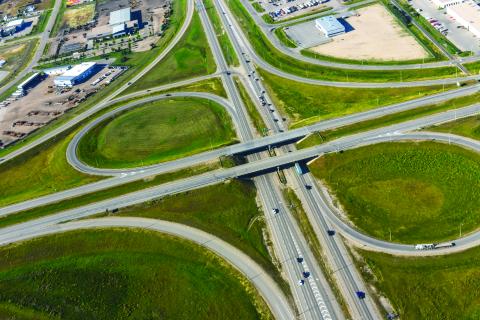
Continued provincial investment, including the twinning of Highway 40 and planning for the Highway 40X Connector, is strengthening the movement of people, equipment and goods throughout northwestern Alberta while creating new opportunities for investment and industrial growth.
These corridors support a regional market that extends well beyond city limits. Grande Prairie serves a trading area of nearly 300,000 people across northwestern Alberta and northeastern British Columbia, making it the commercial and service hub for one of Canada's fastest-growing regions. Together, that market generates approximately $4.7 billion in annual retail spending, creating opportunities for businesses ranging from national retailers and hospitality providers to professional services, construction suppliers and advanced manufacturers.
Those same transportation corridors don't just serve local businesses and consumers. They are the backbone of Alberta's export economy, connecting one of Canada's most productive resource regions to customers around the world.
Grande Prairie sits at the heart of the Montney and Duvernay formations, two of North America's most productive natural gas plays.
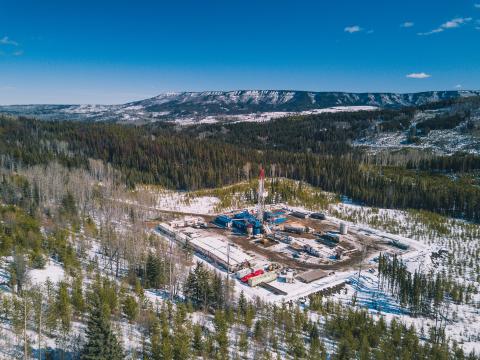
Northwestern Alberta produces 40 per cent of Alberta's pulp, 64 per cent of its panel board and half of the province's timber, while the Peace Region contains approximately five per cent of Canada's agricultural land. These industries depend on reliable transportation infrastructure to move billions of dollars in products to domestic and international markets every year, reinforcing Grande Prairie's role as a critical gateway between production and global trade.
Rail is another key competitive advantage. CN connects Grande Prairie industries to Prince Rupert, Vancouver and markets across North America through one of Canada's highest-capacity freight networks, while Side Group Rail moves approximately $500 million in goods annually from its Grande Prairie operations alone.
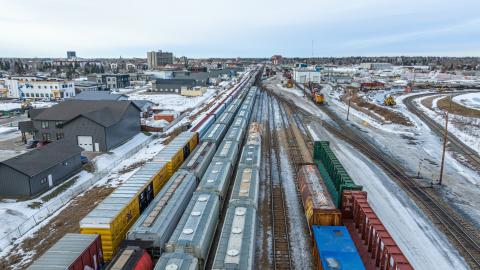
Together, these rail assets strengthen supply chain resilience, reduce transportation costs and give businesses the flexibility to move products efficiently by road, rail or air.
That connectivity extends to the skies. The Grande Prairie Airport provides multiple daily flights to Edmonton and Calgary, connecting businesses and travellers to destinations across Canada and around the world while supporting opportunities for air cargo, commercial development and investment. Building on this advantage, the City and Edmonton Airports have established a strategic alliance to strengthen regional connectivity, enhance airport operations and unlock new economic opportunities through the Grande Prairie Airport.
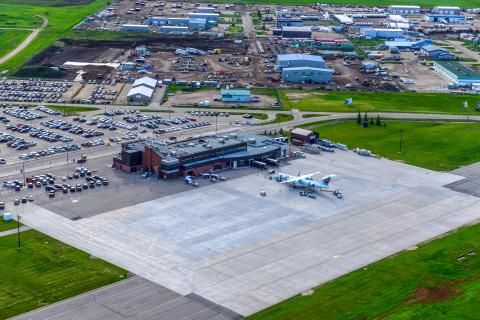
Together, road, rail and air infrastructure position Grande Prairie as one of Northern Alberta's most connected centres for business, trade and investment.
Transportation infrastructure does more than move goods. It influences where businesses choose to invest, expand and build for the future.
When businesses know they can access domestic and international markets efficiently, receive materials on time, attract skilled workers and grow alongside modern infrastructure, they invest with confidence.
Every investment in Grande Prairie's transportation network strengthens Alberta's competitiveness, improves supply chain efficiency and creates new opportunities for economic growth across the province. That is why the City continues to advocate for strategic investments in our economic corridors, such as the Highway 40X Connector, expanded airport-area development, improved regional rail capacity and infrastructure that strengthens northern trade corridors.
These investments are about more than roads and rail lines. They are about maximizing one of Alberta's greatest competitive advantages. By continuing to strengthen Grande Prairie's role within Canada's transportation network, we can move more products, attract more investment and create greater long-term prosperity for the entire province. As Alberta continues advancing its economic corridor strategy, Grande Prairie is ready to remain the Province's strategic partner in connecting resources, businesses and global markets.