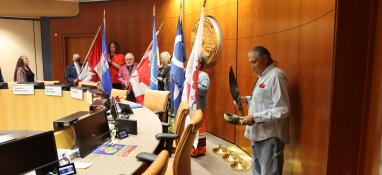
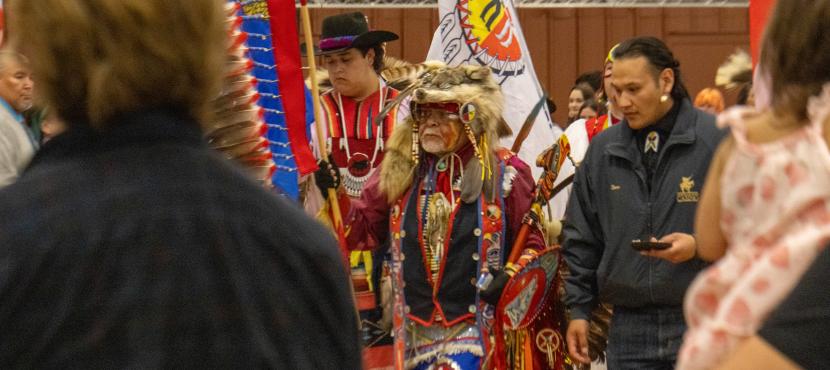
The City respectfully acknowledges the Beaver, Cree, Dene, and Métis people as the original caretakers of these Lands and surrounding areas. We are grateful to live, learn, work and play on Treaty 8 territory within Turtle Island and acknowledge these Lands have been home to diverse and sovereign First Nations and Inuit Nations since Time Immemorial.
It has been recognized that the Beaver people are the traditional inhabitants of the Grande Prairie area. It was not until the 1760’s that the Cree people moved westward into Beaver territory to expand their ventures in the fur trade.
The City of Grande Prairie, in collaboration with Indigenous Peoples, is committed to fostering positive relationships within the community. Through event planning, implementing guiding documents, and engaging community members, the City of Grande Prairie sees a bright future in advancing Truth and Reconciliation.
Truth and Reconciliation
In Grande Prairie, we acknowledge that we are located on Treaty 8 territory, within Turtle Island. Treaty 8 was signed on June 21, 1899, between the Crown and representatives of several First Nations, including the Cree, Dene, Chipewyan, Beaver, Slavey, Dogrib, Yellowknives, and other Indigenous Peoples. Covering approximately 841,487 km², Treaty 8 is one of the largest treaty territories in Canada. At the time of signing, it encompassed portions of what were then the North-West Territories and British Columbia. Today, Treaty 8 extends across northern Alberta, northeastern British Columbia, northwestern Saskatchewan, and parts of the Northwest Territories southeast of Great Slave Lake.
The local Indigenous Nations connected to this area include Duncan’s First Nation, Horse Lake First Nation (formerly the Beaver Indian Band), and Sturgeon Lake Cree Nation. Together, these Nations form the Western Cree Tribal Council.
For the Indigenous signatories, Treaty 8 was not understood as a surrender of land or rights. Rather, it was intended as a nation-to-nation agreement based on mutual respect, cooperation, and the shared stewardship of the land. The treaty represents an ongoing relationship and commitment to working together as partners for the benefit of future generations.